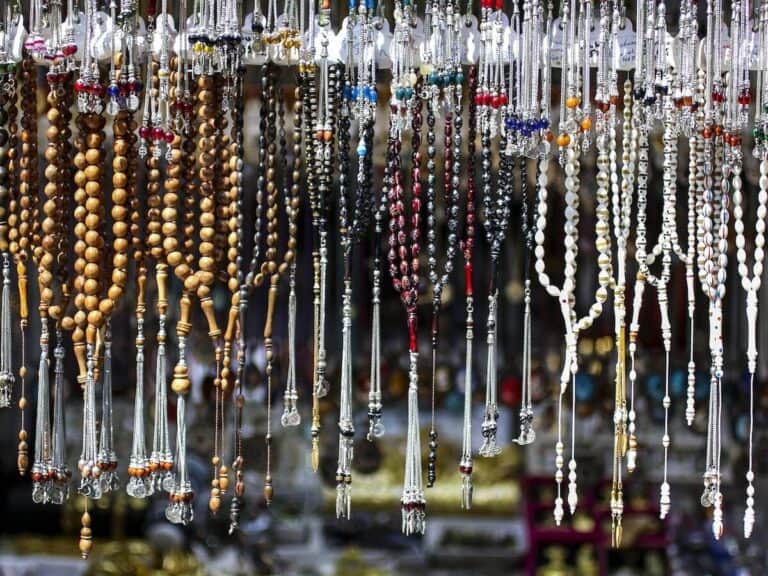
The Seven Sorrows of Mary: Used for the Rosary of the Seven Sorrows

The Rosary of the Seven Sorrows, also called the Chaplet of the Seven Dolors, is one of the most profound devotions in the Catholic tradition. While the standard Dominican Rosary focuses on the life of Christ through Joyful, Sorrowful, Glorious, and Luminous Mysteries, the Seven Sorrows devotion centers specifically on the deep suffering experienced by the Blessed Virgin Mary.
This devotion dates back to the 13th-century Servite Order, who sought to honor Mary’s participation in Christ’s Passion by meditating on seven pivotal events of sorrow in her life. Today, it is prayed by Catholics around the world seeking healing, consolation, and a deeper connection with the compassionate heart of Mary.
This guide explores the complete Seven Sorrows, including full Scripture passages, historical background, spiritual meaning, and when this devotion is used.
Disclosure: Some of the links below may be affiliate links. At no additional cost to you, we may earn a small commission if you make a purchase.
What is the Rosary of the Seven Sorrows?
The Rosary of the Seven Sorrows is a Marian prayer that invites Christians to reflect on seven major moments of suffering in Mary’s life. These events reveal:
- The humanity of Mary
- Her intimate participation in the mission of Jesus
- The cost of redemption
- The depth of love found in sacrifice
Unlike the Dominican Rosary, this devotion does not follow decades of Hail Marys. Instead, each Sorrow is meditated upon individually, accompanied by a brief prayer.
When Do Catholics Pray the Seven Sorrows Rosary?
The Seven Sorrows devotion is traditionally prayed:
- During Lent, especially Fridays
- On the Feast of Our Lady of Sorrows (September 15)
- On the Friday of Sorrows (the Friday before Palm Sunday)
- During times of personal suffering or grief
- As a devotional practice year-round
- When seeking Mary’s intercession for healing, forgiveness, strength, or compassion
This devotion resonates deeply with those experiencing loss of a loved one, anxiety or fear, family suffering, spiritual dryness, or the desire to grow in empathy and endurance.
Why the Seven Sorrows Matter Today
The Seven Sorrows devotion offers a path to emotional and spiritual healing, a deeper understanding of Christ’s Passion, a companion in suffering, a space to process grief, fear, or confusion, and a reminder that faith remains even in the darkest moments
It is one of the most compassionate and human devotions in the Catholic tradition.
The Seven Sorrows of Mary
Below is the complete list of the Seven Sorrows, each with a full explanation and corresponding Scripture reading.
1. The Prophecy of Simeon
Mary learns that the child she loves will bring salvation, but also great suffering. The “sword” symbolizes the lifetime of sorrow she will endure.
“And, behold, there was a man in Jerusalem, whose name was Simeon; and the same man was just and devout, waiting for the consolation of Israel: and the Holy Ghost was upon him.
And it was revealed unto him by the Holy Ghost, that he should not see death, before he had seen the Lord’s Christ.
And he came by the Spirit into the temple: and when the parents brought in the child Jesus, to do for him after the custom of the law,
Then took he him up in his arms, and blessed God, and said,
Lord, now lettest thou thy servant depart in peace, according to thy word:
For mine eyes have seen thy salvation,
Which thou hast prepared before the face of all people;
A light to lighten the Gentiles, and the glory of thy people Israel.And Joseph and his mother marveled at those things which were spoken of him.
And Simeon blessed them, and said unto Mary his mother, Behold, this child is set for the fall and rising again of many in Israel; and for a sign which shall be spoken against;
(Yea, a sword shall pierce through thy own soul also,) that the thoughts of many hearts may be revealed.” – Luke 2:25–35
2. The Flight into Egypt
Mary becomes a refugee mother, fleeing danger to protect Jesus. This sorrow connects deeply with anyone facing displacement, fear, or sudden crisis.
“And when they were departed, behold, the angel of the Lord appeareth to Joseph in a dream, saying, Arise, and take the young child and his mother, and flee into Egypt, and be thou there until I bring thee word: for Herod will seek the young child to destroy him.
When he arose, he took the young child and his mother by night, and departed into Egypt:
And was there until the death of Herod: that it might be fulfilled which was spoken of the Lord by the prophet, saying, Out of Egypt have I called my son.” – Matthew 2:13–15
3. The Loss of the Child Jesus in the Temple
This sorrow reflects the fear, confusion, and anxiety of losing a child. It foreshadows the three days between Christ’s death and Resurrection.
“Now his parents went to Jerusalem every year at the feast of the passover.
And when he was twelve years old, they went up to Jerusalem after the custom of the feast.
And when they had fulfilled the days, as they returned, the child Jesus tarried behind in Jerusalem; and Joseph and his mother knew not of it.But they, supposing him to have been in the company, went a day’s journey; and they sought him among their kinsfolk and acquaintance.
And when they found him not, they turned back again to Jerusalem, seeking him.
And it came to pass, that after three days they found him in the temple, sitting in the midst of the doctors, both hearing them, and asking them questions.And all that heard him were astonished at his understanding and answers.
And when they saw him, they were amazed: and his mother said unto him, Son, why hast thou thus dealt with us? behold, thy father and I have sought thee sorrowing.
And he said unto them, How is it that ye sought me? wist ye not that I must be about my Father’s business?And they understood not the saying which he spake unto them.” – Luke 2:41–50
4. Mary Meets Jesus on the Way to Calvary
Christian tradition holds that Mary encountered Jesus as He carried the Cross. Her sorrow is the pain of witnessing the suffering of the One she loves most.
While not described in detail, this moment is rooted in the Passion narrative.
“And there followed him a great company of people, and of women, which also bewailed and lamented him. But Jesus turning unto them said, Daughters of Jerusalem, weep not for me, but weep for yourselves, and for your children.
For, behold, the days are coming, in the which they shall say, Blessed are the barren, and the wombs that never bare, and the paps which never gave suck. Then shall they begin to say to the mountains, Fall on us; and to the hills, Cover us. For if they do these things in a green tree, what shall be done in the dry?” – Luke 23:27–31
5. The Crucifixion and Death of Jesus
This is Mary’s greatest sorrow: watching Jesus die. Yet it is here she becomes spiritual mother to all believers.
“Now there stood by the cross of Jesus his mother, and his mother’s sister, Mary the wife of Cleophas, and Mary Magdalene.
When Jesus therefore saw his mother, and the disciple standing by, whom he loved, he saith unto his mother, Woman, behold thy son!
Then saith he to the disciple, Behold thy mother! And from that hour that disciple took her unto his own home.After this, Jesus knowing that all things were now accomplished, that the scripture might be fulfilled, saith, I thirst.
Now there was set a vessel full of vinegar: and they filled a spunge with vinegar, and put it upon hyssop, and put it to his mouth.
When Jesus therefore had received the vinegar, he said, It is finished: and he bowed his head, and gave up the ghost.” – John 19:25–30
6. The Body of Jesus is Taken Down From the Cross
Often depicted in the Pietà, this sorrow highlights Mary’s grief as she receives the lifeless body of her Son.
“And now when the even was come, because it was the preparation, that is, the day before the sabbath,
Joseph of Arimathaea, an honourable counsellor, which also waited for the kingdom of God, came, and went in boldly unto Pilate, and craved the body of Jesus.And Pilate marveled if he were already dead: and calling unto him the centurion, he asked him whether he had been any while dead.
And when he knew it of the centurion, he gave the body to Joseph.
And he bought fine linen, and took him down, and wrapped him in the linen, and laid him in a sepulchre…” – Mark 15:42–46
7. Jesus is Laid in the Tomb
This sorrow reflects the finality of death, and the quiet hope of Resurrection.
“And after this Joseph of Arimathaea, being a disciple of Jesus… besought Pilate that he might take away the body of Jesus…
And there came also Nicodemus, which at the first came to Jesus by night…
Then took they the body of Jesus, and wound it in linen clothes with the spices…Now in the place where he was crucified there was a garden; and in the garden a new sepulchre…
There laid they Jesus therefore because of the Jews’ preparation day; for the sepulchre was nigh at hand.” – John 19:38–42
FAQs about the Seven Sorrows Rosary
What is the Seven Sorrows Rosary?
The Seven Sorrows Rosary (also called the Chaplet of the Seven Dolors) is a Marian devotion that meditates on seven major sorrows in the life of the Virgin Mary. Unlike the Dominican Rosary, which has 20 Mysteries, the Seven Sorrows devotion focuses exclusively on events that caused Mary deep suffering as she accompanied Jesus.
Is the Seven Sorrows Rosary Catholic?
Yes. This devotion has been part of Catholic spirituality since the 13th century, promoted especially by the Servite Order. It is fully recognized and encouraged by the Catholic Church.
How is the Seven Sorrows Rosary different from the regular Rosary?
The Seven Sorrows Rosary contains seven groups of seven Hail Marys, each reflecting on one sorrow. The traditional Dominican Rosary contains five decades and focuses on the life of Christ through Joyful, Sorrowful, Glorious, and Luminous Mysteries.
A comparison chart is included below.
Learn more about the 20 Mysteries of the Rosary.
Why should someone pray the Seven Sorrows Rosary?
This devotion helps Catholics:
- Grow in compassion
- Understand Mary’s suffering
- Enter more deeply into the Passion of Christ
- Heal from personal sorrow, trauma, or grief
- Strengthen trust in God during difficult times
Many report that this rosary brings peace, clarity, and emotional healing.
How long does it take to pray the Seven Sorrows Rosary?
Generally 15–25 minutes, depending on how long you meditate on each Sorrow.
Do I need a special Seven Sorrows Rosary?
No. You can purchase a special chaplet, but you can also pray it using an ordinary rosary or even with your fingers. What matters most is the meditation.
What is the difference between the Seven Sorrows and the Sorrowful Mysteries?
The Sorrowful Mysteries (prayed on Tuesdays and Fridays) focus on the Passion of Jesus.
The Seven Sorrows focus on the suffering of Mary throughout her life, not just during the Passion.
Is the Seven Sorrows Rosary mentioned in the Bible?
While the structure itself is not in Scripture, every Sorrow is rooted in biblical events, and each one has a corresponding Scripture passage (included above with full text).
Is the Seven Sorrows Rosary approved by the Church?
Yes. It has centuries of use, papal endorsements, and official approval, especially through the Servite Order (Order of the Servants of Mary).
Seven Sorrows Rosary vs. Dominican Rosary
| Feature | Seven Sorrows Rosary | Dominican Rosary (Traditional Rosary) |
|---|---|---|
| Focus | The seven major sorrows of Mary | The life of Christ through 20 Mysteries (Joyful, Sorrowful, Glorious, Luminous) |
| Origin | 13th century, spread by the Servite Order | 13th century, structured by St. Dominic and later codified by the Church |
| Structure | 7 groups of 7 Hail Marys (one for each sorrow) | 5 decades of 10 Hail Marys each |
| Total Hail Marys | 49 | 53 (plus 6 for introductory prayers) |
| Other Prayers | Intro + prayers after each sorrow; no Creed or Fatima prayers required | Begins with Apostles’ Creed, includes Fatima Prayer, Glory Be, Hail Holy Queen |
| When Prayed | Lent, Feast of Our Lady of Sorrows, times of grief or suffering | Daily devotion; specific mysteries prayed on specific days |
| Primary Purpose | To unite one’s suffering with Mary and deepen compassion | To meditate on salvation history and grow in Christian virtue |
| Spiritual Emphasis | Healing, empathy, endurance, and Mary’s maternal compassion | Holistic meditation on Christ’s life from Incarnation to Resurrection |
| Rosary Beads | Optional; specialized 7-sorrow chaplets available | Standard 5-decade rosary |
| Suitable For | Those experiencing grief, trauma, fear, hardship | General prayer, daily devotion, catechesis, spiritual growth |