Grace Before Meals: The Prayer’s Meaning, History, and More
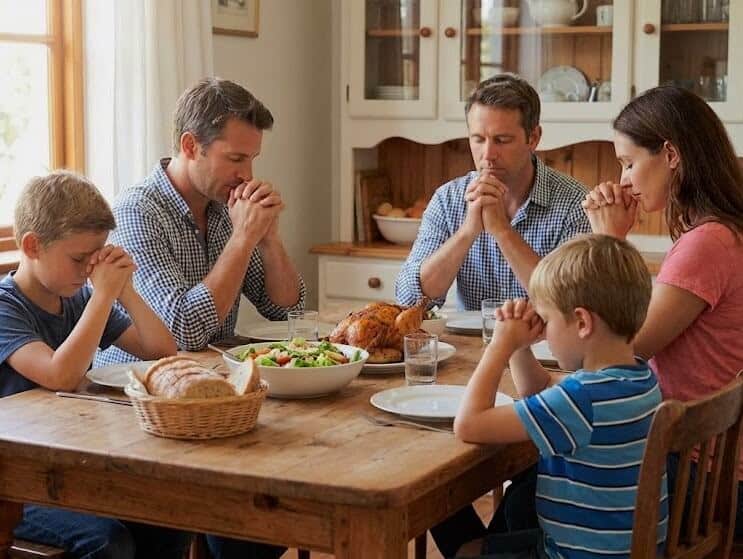
Among the many daily prayers practiced across Christianity, Grace Before Meals stands out for its simplicity and its deep spiritual impact. Pausing before eating, whether at home, at a restaurant, or with family during holidays, creates a moment of gratitude in a world that often rushes forward without reflection.
This short prayer is more than a ritual though. It is an intentional act of acknowledging God as the ultimate provider of every blessing. For centuries, Christians have prayed before meals to thank God for His provision, sanctify the moment, and remember that even ordinary acts like eating can become holy.
In this article, we explore the meaning, origins, biblical foundations, traditions, variations, and spiritual value of praying Grace Before Meals, along with the traditional Catholic before meal prayer and common Christian before meal prayer traditions used across denominations today.
Disclosure: Some of the links below may be affiliate links. At no additional cost to you, we may earn a small commission if you make a purchase.
What is Grace Before Meals?
Grace Before Meals is a short prayer offered before eating, expressing gratitude to God for the food He has provided. It is practiced in Catholic, Orthodox, and Protestant communities, each with their own wording but united in purpose:
- Thanking God for the blessing of sustenance.
- Recognizing God’s provision rather than assuming food is guaranteed.
- Inviting God’s presence into the daily rhythm of life.
- Sanctifying a natural act by turning it into a moment of worship.
The prayer is intentionally brief, making it easy for families, children, and individuals to use daily. Use it at formal gatherings or whisper it quietly before a quick lunch. Grace Before Meals helps Christians practice gratitude in an intentional and meaningful way.
Biblical Foundations of Praying Before Meals
The practice of giving thanks before eating is deeply rooted in Scripture. Far from being a modern Christian habit, it follows the example set by Jesus and the early Church.
Jesus Gave Thanks Before Meals
- Matthew 14:19 – Before feeding the five thousand, Jesus “looked up to heaven, gave thanks, and broke the loaves.”
- Matthew 26:26 – At the Last Supper, Jesus again gave thanks before breaking bread.
- Luke 24:30 – At Emmaus, Jesus blessed the meal and “gave thanks” before revealing Himself.
The Early Church Followed This Practice
- Acts 27:35 – Paul “gave thanks to God in front of them all” before eating.
- 1 Timothy 4:4–5 – Paul teaches that food is “consecrated by the word of God and prayer,” reinforcing the spiritual importance of praying before meals.
These passages form the foundation of both Catholic before meal prayer traditions and Protestant mealtime blessings, showing that gratitude for food is an ancient and essential Christian practice.
Historical Origins of Grace Before Meals
The history of praying before meals spans thousands of years.
Jewish Roots
Jesus and the apostles, as observant Jews, would have prayed traditional blessings before and after meals. Early Christians inherited this practice, adapting it to reflect Christ-centered gratitude.
Early Christian Communities
In the first centuries, Christians prayed thanksgiving prayers at communal meals, often connected to the Eucharistic tradition. Food was seen not as a given but as part of God’s ongoing care.
Monastic Traditions
By the Middle Ages, monasteries formalized structured mealtime prayers. They often chanted, read aloud, or were accompanied by Scripture reading. This model influenced Catholic home practice.
Catholic & Protestant Adoption
Over time, parents taught children standardized mealtime prayers, and the traditional Catholic before meal prayer became widely known and memorized globally. Protestants often used simpler spoken prayers, emphasizing personal and heartfelt gratitude.
Across traditions, the meaning remained consistent: to acknowledge God’s generosity.
The Traditional Catholic Before Meal Prayer
The most widely recognized Grace Before Meals in Catholic tradition is:
“Bless us, O Lord, and these Thy gifts,
which we are about to receive from Thy bounty,
through Christ our Lord. Amen.”
This prayer contains three key themes:
- Bless us – inviting God’s grace upon the people gathered.
- Bless these Thy gifts – acknowledging food as a divine gift.
- Through Christ our Lord – uniting the prayer to Christian faith in Jesus.
For millions of families, this traditional Catholic before meal prayer is a daily moment of unity, gratitude, and spiritual grounding. It is highly encouraged at home, schools, parishes, and gatherings and often taught to children early.
Common Christian Before Meal Prayer Variations
While Catholics often use the traditional formula, other Christians pray in various ways.
Simple Protestant Mealtime Prayer
“Lord, thank You for this food. Bless it to our bodies, and us to Your service. Amen.”
The Protestant Grace can also be more flexible, emphasizing personal expression and heartfelt gratitude rather than set formulas.
Family-Friendly Version
“Thank You, God, for our food and Your love. Amen.”
Longer Christian Prayer
“Heavenly Father, we thank You for Your provision and care. Bless this meal, bless our fellowship, and make us always mindful of those in need. Amen.”
These variations reflect the Christian commitment to giving thanks before eating regardless of denomination. Some Orthodox traditions include longer blessings, sometimes referencing saints, the poor, or the needs of the world.
Why Grace Before Meals Still Matters Today
Even though meals are more accessible and abundant today than in most of human history, praying before meals remains spiritually rich and culturally important.
1. It fosters daily gratitude: In a world where food can feel routine, this prayer interrupts the rush and reminds believers that every meal is a gift.
2. It cultivates humility: Grace Before Meals acknowledges that humans depend on God, not supermarkets, restaurants, or routines, for sustenance.
3. It strengthens family faith: Shared rituals help build strong spiritual foundations in the home. Mealtime prayer teaches children consistency, gratitude, and reverence.
4. It witnesses to faith: Praying quietly before eating in public is a humble but powerful act of Christian identity.
5. It connects daily life to God: By praying before something as ordinary as a meal, Christians integrate faith into everyday moments, not just Sundays.
How to Pray Grace Before Meals Meaningfully
While the prayer is short, its impact grows when prayed intentionally.
1. Pause: Take a few seconds to breathe and recognize God’s presence.
2. Focus: Instead of rushing through the words, allow them to shape your mindset.
3. Personalize: No matter if you’re using the Catholic before meal prayer or a spontaneous Christian mealtime blessing, focus on gratitude.
4. Include Others: Invite family, friends, or guests to join, letting prayer create a moment of shared faith.
Over time, these habits transform the ordinary act of eating into a spiritual rhythm.
Living a Life of Gratitude Beyond the Table
Mealtime Grace is more than just a custom before eating. It’s become a model for daily Christian living. When believers pause to give thanks for simple blessings like food, they develop a posture of gratitude that extends into every area of life: relationships, work, faith, and community.
This simple prayer has profound meaning. Rooted in Scripture, shaped by centuries of Christian tradition, and practiced daily by millions, it teaches gratitude, humility, and spiritual awareness. Learning to thank God for small things shapes the heart to recognize His work in everything.