10 Most Important Religious Sites in Judaism
Judaism, one of the world’s oldest monotheistic religions, is steeped in rich traditions, sacred texts, and ancient practices. Its spiritual and cultural heritage is deeply connected to various significant sites spread across the globe, primarily concentrated in the historical and contemporary land of Israel.
These locations are not merely places of worship; they are touchstones of Jewish identity, history, and collective memory. From the ancient stones of the Western Wall in Jerusalem to the mystic air of Safed, each site tells a story of faith, resilience, and the enduring bond between the Jewish people and their heritage.
In this article, we journey through ten of the most important religious sites in Judaism. These sites are more than historical landmarks; they are living, breathing embodiments of the Jewish faith, offering insights into the religious, cultural, and historical essence of Judaism.
Whether you’re a pilgrim, a history buff, or someone seeking a deeper understanding of Jewish tradition, these sacred destinations provide a profound connection to the past and a meaningful context for the present.
Join us as we explore these venerable sites, each with its unique significance and timeless allure.
1. The Western Wall (Kotel) | Jerusalem, Israel
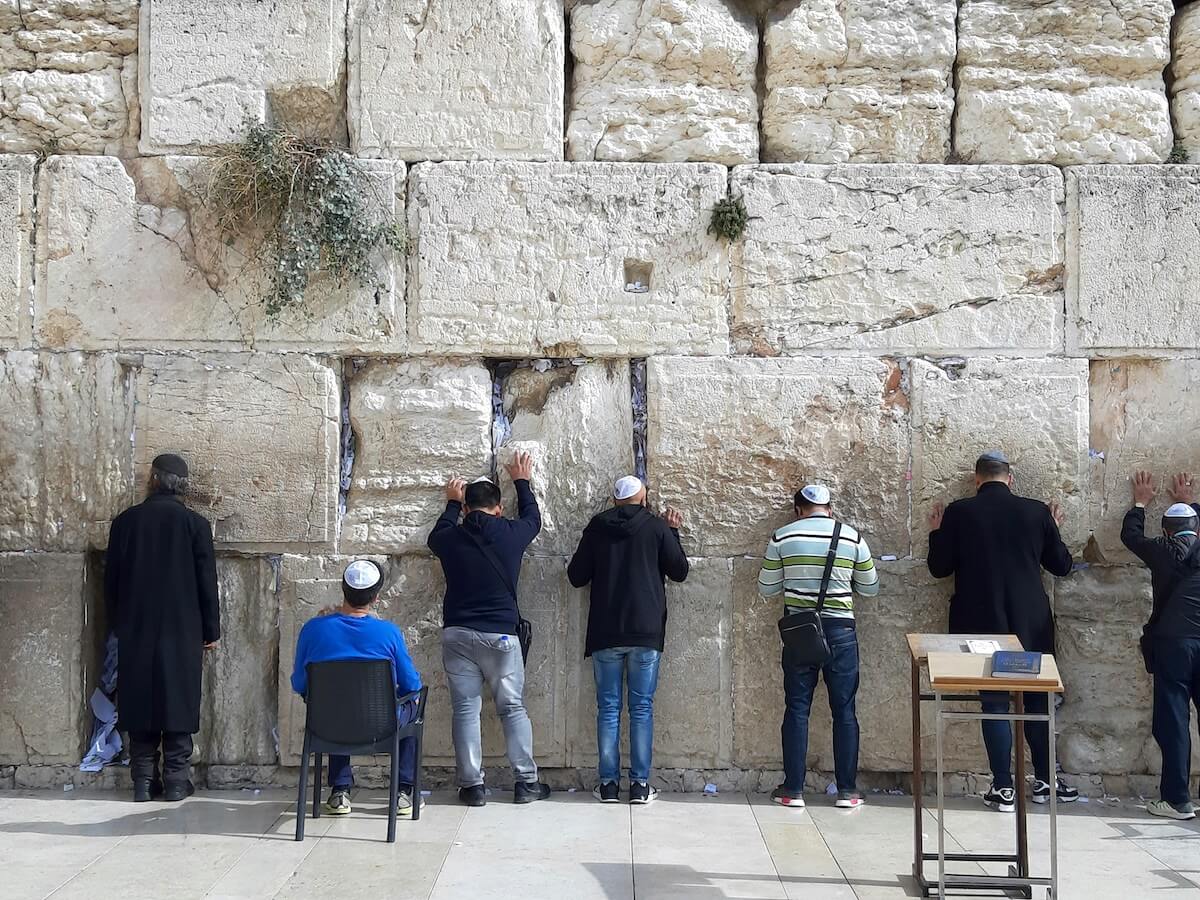
The Western Wall, also known as the Kotel, is a remnant of the ancient limestone retaining wall that surrounded the Second Temple in Jerusalem. The Temple was destroyed by the Romans in 70 CE, and the Western Wall is the closest accessible site to the Holy of Holies, making it the holiest place where Jews are permitted to pray.
The Wall has been a site of Jewish pilgrimage and prayer for centuries. Thousands of people from around the world visit the Wall to offer prayers, often inserting written notes into the cracks between the stones. It is a symbol of Jewish endurance and a poignant reminder of the Temple’s destruction.
2. Temple Mount (Har HaBayit) | Jerusalem, Israel
The Temple Mount, known in Hebrew as Har HaBayit, is the most sacred site in Judaism. It is the location where both the First Temple, built by King Solomon, and the Second Temple, rebuilt after the Babylonian Exile, once stood.
Jewish tradition holds that the Foundation Stone on the Temple Mount is the place from which the world was created and where Abraham prepared to sacrifice his son Isaac.
Today, the Temple Mount is also home to the Dome of the Rock and the Al-Aqsa Mosque, making it a site of significant importance for Muslims as well. Jewish access to the Temple Mount is restricted and regulated due to its sensitive religious and political nature.
3. Cave of the Patriarchs (Ma’arat HaMachpelah) | Hebron, West Bank
The Cave of the Patriarchs, or Ma’arat HaMachpelah, is believed to be the burial site of the Jewish patriarchs and matriarchs: Abraham and Sarah, Isaac and Rebecca, Jacob and Leah. It is located in the city of Hebron and is the second holiest site in Judaism, after the Temple Mount.
The site has been venerated for thousands of years and features a large Herodian-era structure built over the caves. Today, it functions as a synagogue and a mosque, with separate sections for Jewish and Muslim worship. The Cave of the Patriarchs is a place of prayer and pilgrimage, especially on the Jewish holidays of Parashat Chayei Sarah and Passover.
4. Rachel’s Tomb (Kever Rachel) | Bethlehem, West Bank
Rachel’s Tomb, or Kever Rachel, is traditionally considered the burial place of Rachel, the beloved wife of Jacob and mother of Joseph and Benjamin. It is located near Bethlehem, on the northern entrance of the city.
The tomb has been a site of Jewish veneration since ancient times, mentioned in the Bible and later texts. It is a place where Jews come to pray, particularly women who seek Rachel’s intercession for fertility and childbirth. The tomb is enclosed in a building with a white dome and is surrounded by a complex that includes a synagogue and facilities for visitors.
5. Mount Sinai (Har Sinai) | Sinai Peninsula, Egypt
Mount Sinai, known as Har Sinai in Hebrew, is traditionally identified as the mountain where Moses received the Ten Commandments from God. This event is a cornerstone of Jewish faith, representing the covenant between God and the Israelites.
The exact location of Mount Sinai is a matter of debate, but it is generally believed to be in the southern part of the Sinai Peninsula. The mountain is a popular pilgrimage site for Jews and Christians, who often climb it at night to reach the summit by sunrise. At the base of Mount Sinai lies St. Catherine’s Monastery, one of the oldest continuously functioning Christian monasteries in the world.
6. Safed (Tzfat) | Northern Israel
Safed, or Tzfat, is one of the four holy cities in Judaism, alongside Jerusalem, Hebron, and Tiberias. Located in the mountains of northern Israel, Safed has been a center of Jewish mysticism and Kabbalistic studies since the 16th century. The city is known for its ancient synagogues, narrow alleyways, and vibrant artist community.
Significant sites in Safed include the Ari Ashkenazi Synagogue, named after the famous Kabbalist Rabbi Isaac Luria, and the Abuhav Synagogue, which houses a Torah scroll said to have been written by the medieval Kabbalist Rabbi Yitzhak Abuhav. Safed is a spiritual and cultural hub, attracting visitors seeking inspiration and connection to Jewish mysticism.
7. Mount of Olives (Har HaZeitim) | Jerusalem, Israel
The Mount of Olives, or Har HaZeitim, is a mountain ridge east of Jerusalem’s Old City, overlooking the Temple Mount. It has been used as a Jewish cemetery for over 3,000 years and is the burial site for many prominent figures in Jewish history.
The Mount of Olives is also associated with significant biblical events, including King David’s flight from Absalom and Jesus’ ascension to heaven in Christian tradition.
It offers a panoramic view of Jerusalem and is a site of pilgrimage and reflection for Jews, Christians, and Muslims. The Mount of Olives is deeply embedded in Jewish eschatological beliefs, with many Jews wishing to be buried there in anticipation of the resurrection of the dead at the coming of the Messiah.
8. Tiberias (Tverya) | Galilee, Israel
Tiberias, or Tverya, is one of Judaism’s four holy cities. Located on the western shore of the Sea of Galilee, it has been an important center of Jewish learning and culture since antiquity. Tiberias is known for its hot springs and historic sites, including the tombs of prominent Jewish sages such as Maimonides (Rambam) and Rabbi Akiva.
The city was a center of Jewish scholarship, where the Jerusalem Talmud was compiled. Today, Tiberias is a popular destination for religious and secular visitors, offering a blend of historical, religious, and natural attractions.
9. Jericho (Yeriho) | West Bank
Jericho, or Yeriho, is one of the oldest inhabited cities in the world, with evidence of settlement dating back to 10,000 BCE. It is located near the Jordan River in the West Bank. Jericho is associated with several significant biblical events, including the story of Joshua and the Battle of Jericho, where the city’s walls fell after the Israelites encircled it and blew their trumpets.
The city is also linked to the prophets Elijah and Elisha. Jericho’s archaeological sites, such as the ancient city walls and the Mount of Temptation, attract visitors interested in biblical history and ancient civilizations.
10. Meron (Mount Meron) | Northern Israel
Mount Meron, located in northern Israel, is best known for the tomb of Rabbi Shimon bar Yochai, a prominent Jewish sage and mystic. Rabbi Shimon is traditionally credited with authoring the Zohar, a foundational work of Kabbalah.
The site is a major destination for pilgrimage, particularly on the Jewish holiday of Lag BaOmer, which marks the anniversary of Rabbi Shimon’s death. Thousands of people gather at Mount Meron each year to celebrate with prayers, bonfires, and festive activities.
The site also offers stunning natural scenery and is part of a larger nature reserve, making it a place of both spiritual and natural beauty.


